
What Are LVL Beams and How Are They Manufactured?
Laminated Veneer Lumber (LVL) beams represent a significant advancement in engineered wood products, transforming how construction professionals approach structural challenges. The lamination process creates these high-performance beams by bonding multiple thin wood veneers together using specialised adhesives under controlled heat and pressure conditions.
How LVL Beams Are Made
During the manufacturing of laminated veneer lumber, wood veneers are carefully arranged with their grain running parallel to the beam’s length. This precise orientation maximises structural integrity whilst the industrial-grade adhesives create permanent bonds between layers. The manufacturing process subjects these assembled veneers to temperatures reaching 150°C and pressures exceeding 1.4 MPa, resulting in a homogeneous structural member.
Advantages of LVL Beams over Traditional Timber
The engineered construction delivers remarkable properties that surpass traditional timber:
- High strength-to-weight ratio enabling longer spans with reduced material usage
- Superior stiffness preventing deflection under heavy loads
- Resistance to warping and splitting maintaining dimensional stability
- Consistent performance eliminating natural wood defects like knots and grain irregularities
Traditional timber beams suffer from natural inconsistencies that can compromise structural performance. You’ll find solid timber varies significantly in strength depending on grain patterns, moisture content, and natural defects. LVL beam eliminate these variables through their controlled manufacturing process, delivering predictable performance characteristics essential for critical formwork applications where concrete loads demand reliable support systems.
Why Are LVL Beams Preferred in Formwork Systems?
LVL beams advantages make them the go-to choice for construction professionals who demand reliable formwork support. The engineered nature of these beams delivers a superior strength-to-weight ratio that traditional timber simply cannot match. You’ll find that a single LVL beam can support the same loads as much heavier conventional lumber whilst being significantly easier to handle on site.
The load-carrying capacity of LVL beams remains consistent across their entire length, eliminating the weak spots and natural defects found in solid timber. This reliability means you can trust your formwork system to maintain its structural integrity throughout the concrete pouring process without unexpected failures or deflection.
Handling and assembly become remarkably straightforward when you switch from traditional 4×6 lumber to LVL beams. The uniform dimensions and predictable properties allow your crew to work more efficiently, reducing installation time and labour costs. You won’t encounter the warping, twisting, or splitting issues that plague conventional timber, ensuring your formwork maintains precise alignment.
The dimensional stability of LVL beams proves particularly valuable in formwork support applications where accuracy is critical. Unlike traditional lumber that can shrink, swell, or warp with moisture changes, LVL beams maintain their shape and strength characteristics. This consistency translates directly into better concrete finishes and reduced rework, making them an essential component in professional construction projects.
How Are LVL Beams Used in Different Formwork Applications?
H20 timber beams represent the most versatile application of LVL technology in modern formwork systems. These engineered beams feature a distinctive double T-section design that maximises structural efficiency whilst minimising weight. The flanges provide excellent bending resistance, whilst the web maintains stability under load. Protective plastic caps shield the beam ends from moisture and impact damage during repeated use on construction sites.
Vertical Formwork Applications
LVL beams excel in vertical formwork configurations where they support shuttering film faced plywood systems for walls and columns. You can position H20 beams at regular intervals behind the plywood sheeting, creating a rigid framework that withstands concrete pressure without deflection. The beams’ consistent dimensions ensure uniform support across the entire formwork surface.
Horizontal Formwork Solutions
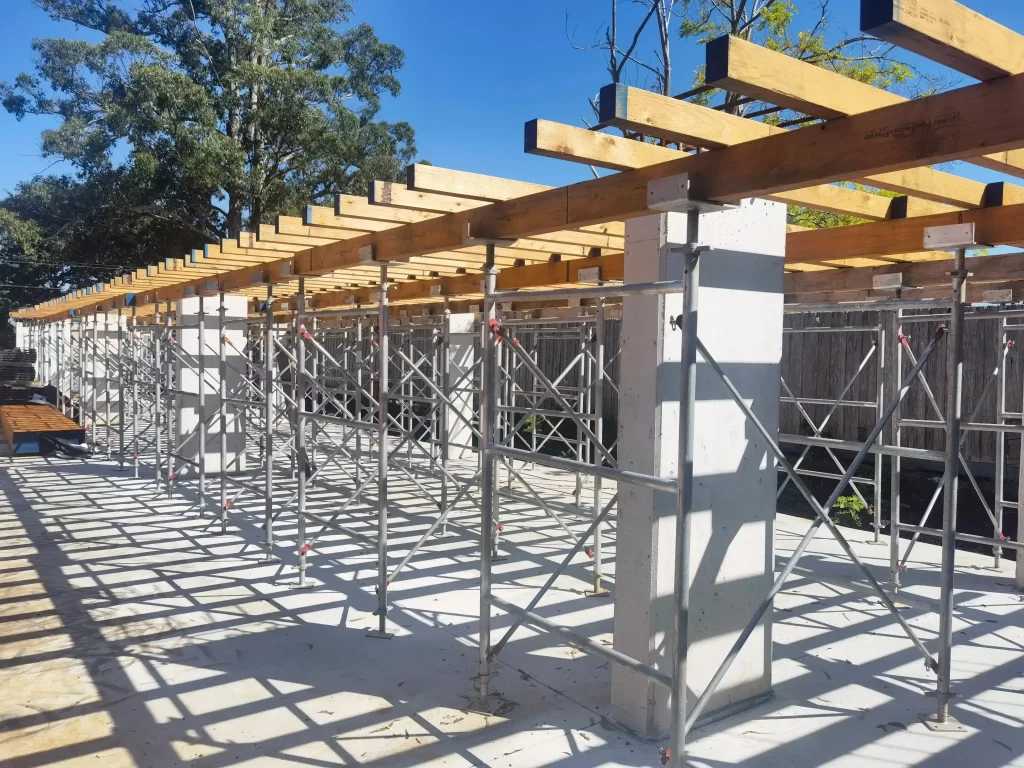
For slab construction, LVL beams function as primary supports in falsework systems. You’ll typically space these beams according to load calculations, supporting formwork plywood that directly contacts the concrete. The beams can span considerable distances between props or scaffolding supports.
Connection Methods for Complex Structures
Specialised clamps enable you to join multiple H20 beams for extended spans or curved applications. These connections maintain structural integrity whilst allowing flexibility in formwork design. You can create custom configurations using:
- Beam clamps for end-to-end connections
- Adjustable brackets for angular joints
- Curved connectors for radius formwork
The modular nature of these systems allows rapid assembly and dismantling across diverse construction projects.
What Are the Common Sizes and Treatments of LVL Beams for Construction Use?
LVL beam sizes in Australia follow standardised dimensions that accommodate various construction requirements. The most common height measures approximately 20 centimetres, providing optimal structural integrity for formwork applications. Standard lengths range from 1 to 6 metres, allowing you to select appropriate spans without excessive waste or joints.
Standard Dimensions and Specifications
- Height: Typically 200mm (20cm) for maximum load-bearing capacity
- Width: Usually 45mm or 63mm depending on application requirements
- Length: Available in 1m, 2m, 3m, 4m, 5m, and 6m options
- Weight: Approximately 8-12 kg per linear metre
Surface Treatments for Enhanced Durability
Modern LVL beams receive antiseptic treatment during manufacturing to prevent fungal decay and insect damage. This treatment penetrates the wood fibres, extending service life significantly. Waterproof coatings create a protective barrier against moisture absorption, preventing warping and dimensional changes during concrete pouring.
You’ll find these treatments particularly beneficial in wet formwork projects where concrete moisture exposure is inevitable. The protective coatings maintain structural integrity throughout multiple pour cycles, reducing replacement costs.
Wet and Dry Application Suitability
The combination of antiseptic treatment and waterproof coatings makes LVL beams suitable for both wet and dry formwork environments. Wet applications include basement walls, swimming pools, and water retention structures. Dry applications encompass standard building construction where moisture exposure remains minimal.
These treated beams maintain dimensional stability across temperature variations, ensuring consistent performance regardless of environmental conditions.
How Do LVL Beams Compare to Other Structural Materials in Construction?
1. Advantages of LVL over Steel
LVL vs steel presents compelling advantages for construction projects:
- Ease of installation: Steel beams require specialised welding equipment and skilled tradespeople, whilst LVL beams can be cut and assembled using standard carpentry tools.
- Corrosion resistance: Steel structures demand regular maintenance to prevent corrosion, particularly in coastal environments where salt exposure accelerates rust formation. LVL beams naturally resist corrosion without additional protective coatings.
2. Benefits of LVL compared to Reinforced Concrete
LVL vs reinforced concrete reveals significant installation benefits:
- Reduced waiting periods: Concrete requires extensive formwork, curing time, and heavy machinery for placement. LVL beams arrive ready for immediate installation, eliminating waiting periods and reducing project timelines.
- On-site modifications: You can modify LVL dimensions on-site without compromising structural integrity, unlike concrete which requires complete reconstruction for alterations.
3. Versatile Applications of LVL
The versatility of LVL extends beyond formwork applications. These engineered beams serve as:
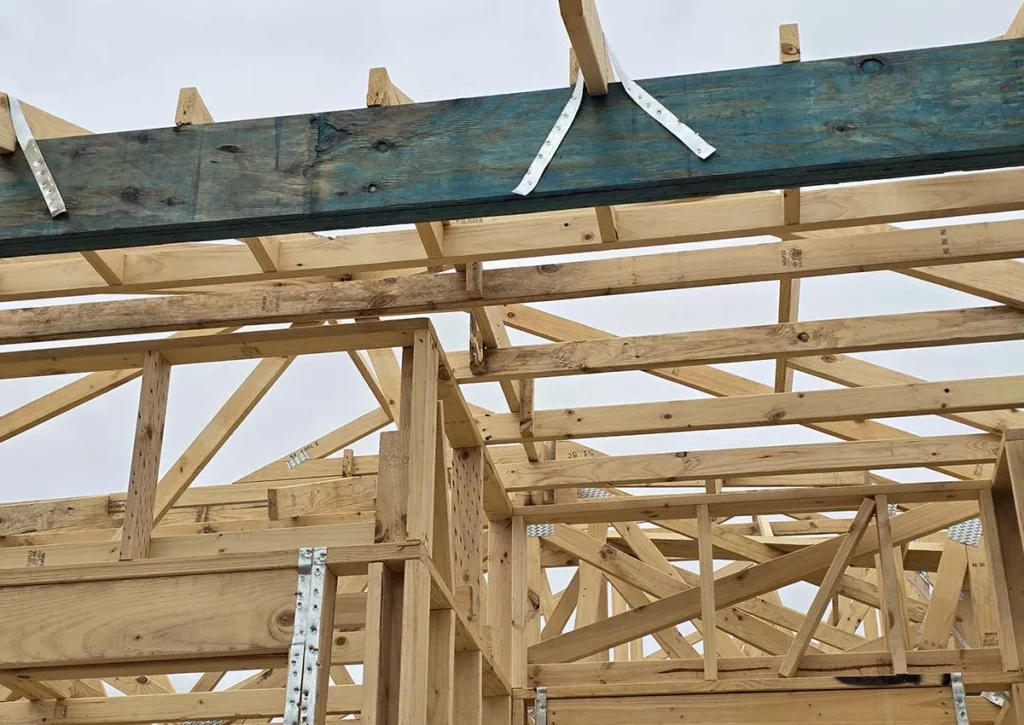
- Rafters in residential and commercial roofing systems
- Joists for floor and ceiling frameworks
- Lintels spanning door and window openings
- Truss chords in complex roof structures
4. Cost-effective Construction with LVL
Cost-effective construction materials calculations favour LVL beams through reduced labour costs and faster installation times:
- A typical steel beam installation requires crane hire and multiple trades, whilst LVL beams need only basic lifting equipment and carpentry skills.
- Material waste decreases significantly with LVL beams due to precise manufacturing tolerances and the ability to cut exact lengths on-site.
Transport costs remain lower for LVL beams compared to steel or precast concrete alternatives, reducing overall project expenses.
What Are the Environmental Benefits of Using LVL Beams in Construction?
Sustainable construction materials have become a priority for modern building projects, and LVL beams represent a significant advancement in environmentally responsible construction practices. These engineered wood sustainability solutions utilise renewable timber resources through precision manufacturing processes that maximise material efficiency whilst minimising waste generation.
Efficient Use of Timber Resources
The lamination process transforms smaller wood pieces into high-performance structural elements, effectively utilising timber that might otherwise be discarded. This approach reduces the demand for old-growth forests and makes productive use of fast-growing plantation timber species. You benefit from a construction material that maintains the natural carbon storage properties of wood whilst delivering superior structural performance.
Lower Transportation Emissions
Transportation efficiency represents another key environmental advantage of LVL beams. Their lightweight nature significantly reduces fuel consumption during delivery to construction sites compared to steel or concrete alternatives. A typical LVL beam weighs approximately 60% less than equivalent steel sections, translating to lower carbon emissions throughout the supply chain.
Versatile Reusability
The reusability factor of LVL beams extends their environmental benefits beyond single-use applications. You can dismantle and relocate these beams across multiple construction projects, particularly in formwork applications where they maintain structural integrity through numerous concrete pours. This repeated use cycle reduces the overall environmental impact per project whilst delivering cost savings that make sustainable construction practices economically viable for your building projects.
How Does Proper Installation Impact the Performance of LVL Formwork?
Proper LVL installation directly determines the structural integrity and safety of your formwork system. Correct positioning requires precise alignment of beams to distribute loads evenly across the concrete surface. You must secure each beam using appropriate clamps and connections to prevent movement during the concrete pouring process.
The formwork strength optimisation depends on your attention to spacing requirements between beams. Standard H20 LVL beams typically require specific intervals based on the concrete load and slab thickness. You achieve maximum load-bearing capacity by following manufacturer specifications for beam placement and support points.
Integration techniques with complementary materials enhance system performance:
- Plywood attachment: Secure formwork plywood directly to LVL beams using appropriate fasteners
- Reo bar coordination: Position beams to accommodate reinforcement bar placement without interference
- Support structures: Connect beams to scaffolding or props using certified clamps and brackets
Your maintenance practices during concrete pouring protect the investment in LVL formwork. Regular inspection of connections prevents loosening under dynamic loads. Clean concrete spillage immediately to prevent adhesion to beam surfaces. Monitor deflection limits to ensure beams remain within acceptable parameters.
Installation techniques that prioritise beam protection extend service life significantly. Apply release agents to prevent concrete bonding while maintaining the protective plastic caps on H20 beam ends. Proper storage between pours prevents moisture damage and warping that compromises structural performance.
What Role Do Related Materials Like Reo Bars and Formwork Plywood Play Alongside LVL Beams?
Reo bars installation forms the backbone of reinforced concrete structures, working in perfect harmony with LVL beam formwork systems. These steel reinforcement bars create the internal skeleton that gives concrete its tensile strength, whilst LVL beams provide the external support framework during the pouring and curing process. You’ll find that proper reo bar placement within the formwork cavity ensures maximum structural integrity once the concrete sets.
The choice between formwork plywood types F14 vs F17 significantly impacts your project’s durability and finish quality. F14 plywood offers adequate performance for standard applications with its 14mm thickness and moderate moisture resistance. F17 plywood, however, delivers superior strength and extended service life through enhanced bonding agents and thicker construction, making it ideal for demanding projects requiring multiple reuses.
High-density overlay plywood represents the premium option for achieving exceptional concrete finishes. This specialised plywood features a resin-impregnated fibre overlay that creates an ultra-smooth surface, resulting in architectural-grade concrete with minimal imperfections. You’ll appreciate how HDO plywood reduces the need for extensive finishing work whilst maintaining its surface integrity through numerous concrete pours. You may like to visit https://worksafe.nt.gov.au/forms-and-resources/safety-alerts/non-compliant-plywood-sold-for-formwork-use to get more about non-compliant plywood.
The integration of these materials with LVL beams creates a comprehensive formwork system where each component enhances the others’ performance, delivering consistent results across various construction applications.
How Does Chain & Shade Mesh Complement the Use of LVL Beams on Construction Sites?
Chain shade mesh benefits extend far beyond basic sun protection when integrated with LVL formwork systems. These specialised meshes create protective barriers that safeguard both workers and materials during critical construction phases. You’ll find that 50% coverage mesh provides adequate protection for most applications whilst maintaining excellent visibility, whilst 90% coverage options deliver maximum protection in harsh Australian conditions.
The worker safety mesh creates comfortable working environments around LVL formwork installations. Direct sun exposure can cause concrete to cure too rapidly, potentially compromising the structural integrity of your formwork system. Chain mesh prevents this issue by reducing surface temperatures and maintaining optimal curing conditions for concrete supported by LVL beams.
Urban construction sites benefit significantly from the noise reduction properties of chain shade mesh. The mesh material dampens sound transmission, creating quieter work environments that comply with local council regulations. This acoustic control becomes particularly valuable when working with power tools during LVL beam installation and formwork assembly.
UV-resistant mesh options ensure long-term performance alongside durable LVL formwork systems. High-quality chain shade mesh withstands continuous outdoor exposure without degrading, maintaining its protective properties throughout extended construction projects. You can expect these meshes to perform consistently across multiple concrete pours, matching the reusability of your LVL beam systems whilst protecting your investment in formwork materials.
What Are Common Challenges Faced When Using Formwork Plywood with LVL Beams?
Using formwork plywood with LVL beams can come with its own set of challenges that may affect your project timeline and budget. Here are some common issues you may encounter:
1. Warping
Warping is one of the most common problems you’ll face, especially when moisture seeps into the plywood surface during the concrete setting process. The weight and heat generated during concrete curing can cause the panels to bend or twist, weakening the structure of your formwork system.
2. Damage During Concrete Pouring
Damage during concrete pouring often happens at the edges and corners of the panels where high-pressure concrete flow creates stress points. You may notice delamination, surface gouging, and joint separation that reduces the plywood’s ability to bear weight when working alongside LVL beams.
How to Maintain Plywood Durability
To extend the lifespan of your formwork and overcome these challenges, here are some maintenance strategies you can implement:
- Clean panels immediately after removing the concrete using suitable solvents
- Apply protective sealants to cut edges and damaged areas
- Store plywood flat in dry, well-ventilated spaces between uses
- Inspect for structural damage before each deployment
Best Practices for Reuse
When it comes to reusing formwork plywood, it’s important to follow best practices that focus on systematic panel rotation and careful handling procedures. Here are some tips to minimise project costs:
- Implement a numbering system that tracks each panel’s usage history
- Replace heavily worn panels strategically instead of replacing entire batches
Importance of Regular Maintenance Checks
Regular maintenance checks during the concrete setting process are crucial in identifying potential failures before they compromise your formwork system. This proactive approach ensures that your combination of LVL beams and plywood continues to perform optimally throughout multiple construction cycles.
More to Read : Reo Bar Safety: Best Practices for Handling and Installation